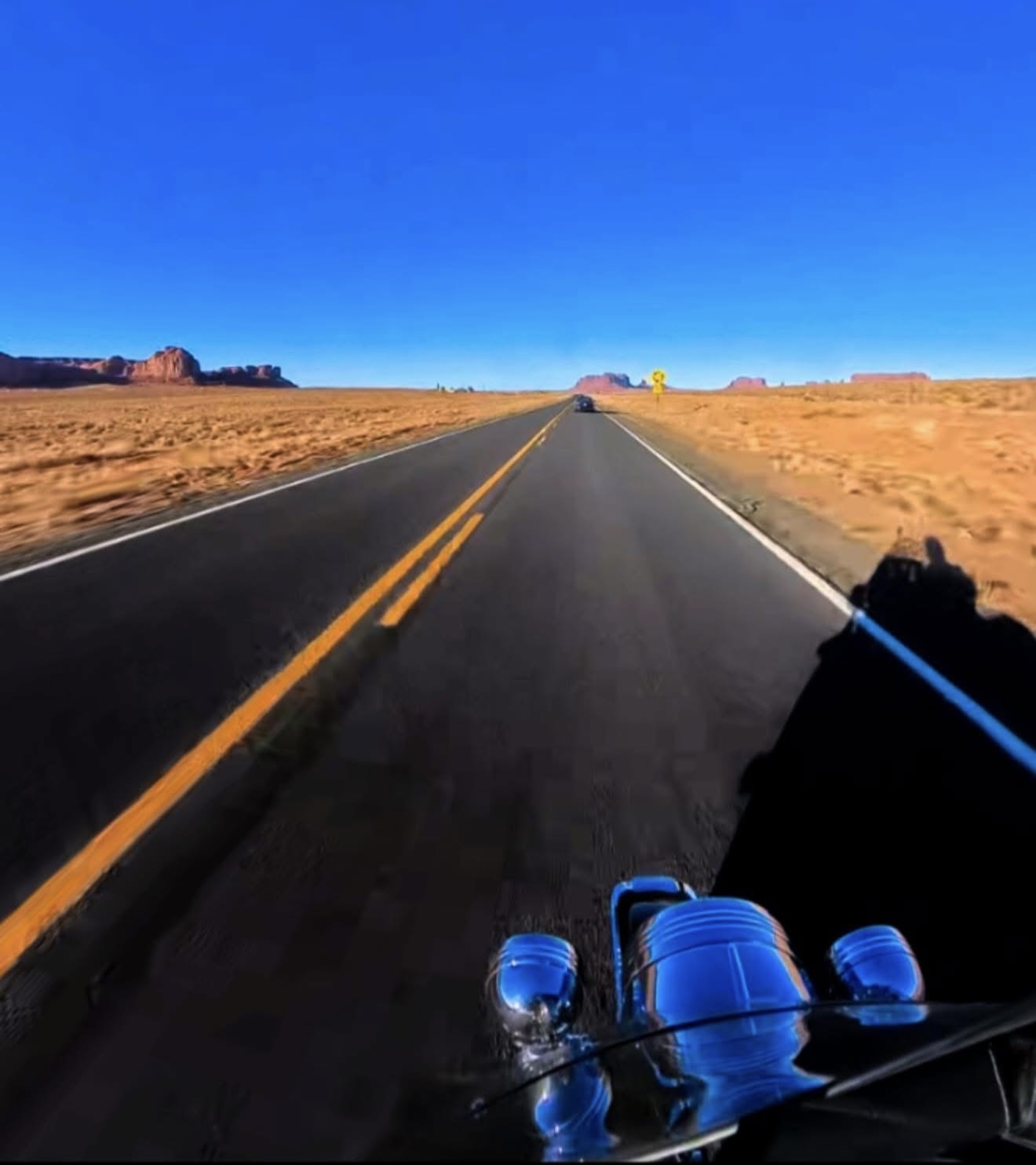
Photo by T EZ Rider Hetz from the WE RIDE HOGWORKZ Facebook Group
- Intersection caution: Avoid stopping on painted lines; wet paint is extremely slippery. Plant foot firmly if necessary.
- Weight & rotation control: Motorcycle tilts use angular momentum. Smooth braking and proper body positioning maintain control.
- Rear vs. front brake: Apply rear brake first to stabilize, then front brake progressively for full stopping power.
- Front brake caution: Grabbing abruptly causes suspension dive or lock-up. Squeeze progressively to maintain traction.
- Counter steering: Above 30 mph, push left handlebar (or pull right) to turn. Shifts tire contact and allows precise cornering.
- Practice safely: Try in open areas first; gradual pressure builds confidence and control.
- Low-speed adjustment: Technique less noticeable; bike prefers traditional steering and body movements.
- Smooth, controlled inputs: Avoid panic; improve apex corrections and evasive maneuvers with experience.
Stopping at an intersection? Think twice before letting your tires rest on those highway stripes. When it is damp or wet, paint turns into instant ice, slippier than a bar of soap in a shower. Set your foot down firm and flat like you are planting a flag, or better yet, just avoid stopping on the paint altogether.
And those mid-air tilts you see on motocross jumps? That isn't magic. It’s physics called angular momentum. Riders tap the rear brake to stop the spinning wheel, which transfers that energy to the bike and pitches the nose down. On the street, you won't be flying through the air, but the physics of rotation still apply. Smooth, thoughtful inputs are required to keep the bike stable, while abrupt changes—like slamming a brake or chopping the throttle—will upset your balance just like a jumper losing control.
When it comes to stopping, don't underestimate the rear brake. Gently applying it first helps stabilize the bike and keeps the suspension settled, especially on uneven or loose surfaces. Then bring in the front brake progressively, that's where most of your stopping power comes from. Together, they give you a smooth, controlled stop without upsetting the balance of the bike. On dirt bikes, this technique is even more useful for keeping traction and control, but on the street, it's all about balance and confidence.
Feeling the front end dive or the tire skip when braking? Chances are you're grabbing the front brake lever too abruptly. The front brake provides 70% or more of your stopping power, but if you snap it on instantly, the suspension compresses violently and the tire can lock up. Take a cue from experienced riders: use 'progressive braking.' Squeeze the lever gently to load the suspension, then increase pressure firmly. This keeps the tire planted and stops you faster without the drama.
If you are riding above 30 miles per hour and need to change direction quickly, counter steering is your best friend. To go left, gently push the left handlebar or, if it feels more natural, give a light pull on the right. This leans the bike, shifts the tire contact patch, and lets you carve corners or dodge trouble like a pro. It takes practice, so do not try it until you are confident piloting your machine. Smooth, controlled inputs are key because jerky movements can make the bike feel unstable. Try it first in a safe open area and you will see how much easier apex corrections and evasive maneuvers can become.
It feels counter-intuitive and a little nerve-wracking the first time you try it, but this technique really starts to shine as speed increases, while at very low speeds the bike prefers old-fashioned steering and body English, making the effect less obvious. You can test it on a straight road with no oncoming traffic by giving a very light push on one handlebar or the other and noticing how the bike reacts. Think suggest not command, because it takes only a gentle touch. As you get more familiar with how the bike responds, you can gradually add a bit more pressure, and once comfort and confidence kick in, you will be ready to use it in corners with smooth, controlled inputs instead of panic and hope.